

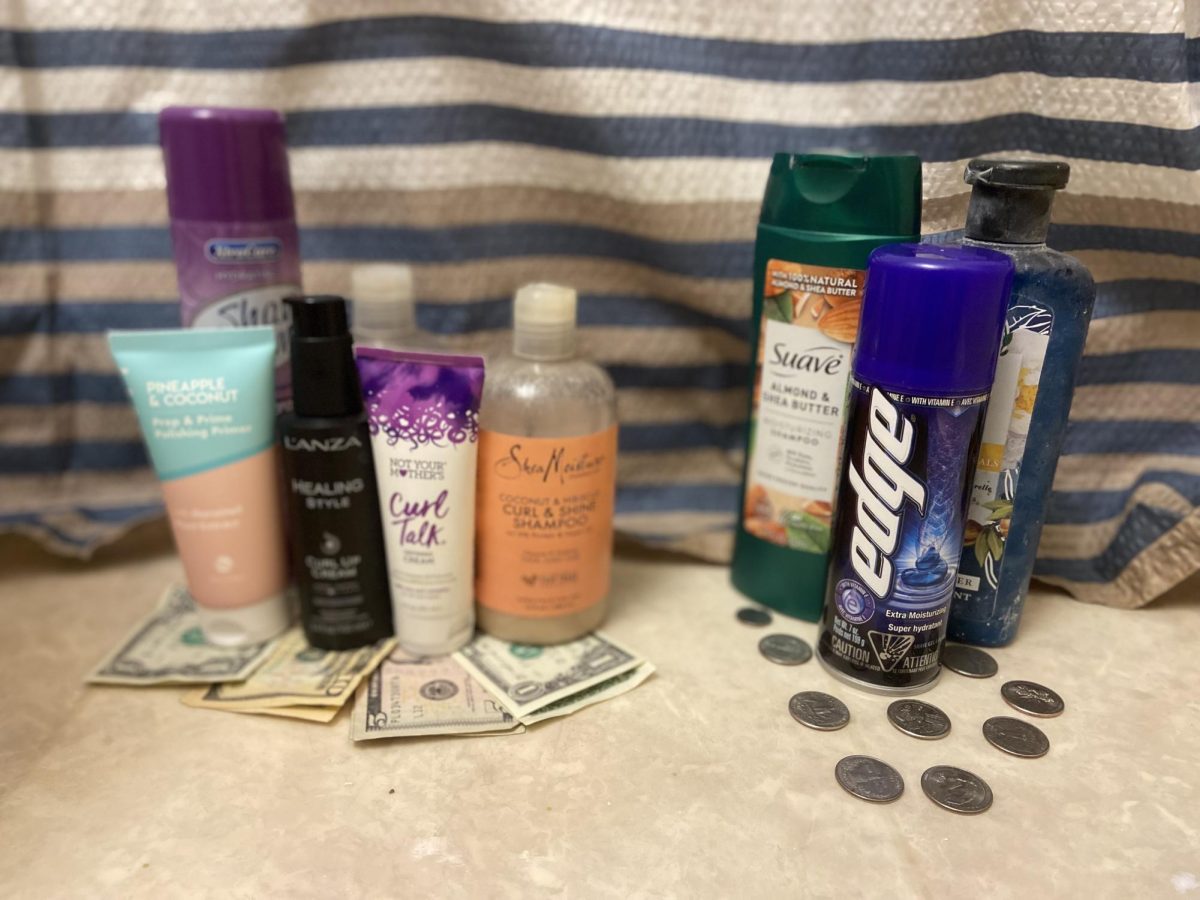
A bottle of shampoo for men and one for women may look identical, but the price tag often tells a different story. This price gap, nicknamed “pink tax” affects women across countless everyday purchases. Paying more just because a product is labeled “for women” is not only unfair, it’s proof that gender bias and sexism still seep into even the most ordinary parts of life.:
One of the biggest problems with pink tax is that it places an unnecessary financial burden on women. Everyday items like personal care products and clothing already make up a large portion of many people’s budgets and paying more for the same thing only makes the cost heavier. A recent analysis done by the New York City Department of Consumer Affairs found that “women pay 7 percent more on average than similar products 43 percent of the time,” showing how widespread the issue is. This kind of price gap is not only frustrating, it adds up over time, creating a cycle where women are consistently spending more than men for equal products.
The pink tax also highlights how companies exploit gendered marketing to maximize profit. Instead of offering fairly priced products to everyone, brands rely on stereotypes to convince women to pay more for items that are virtually identical to men’s versions. This shows that the issue is not about product quality, but about corporations taking advantage of consumers based on gender.
Beyond the financial impact, pink tax reinforces harmful messages about gender equality. When women are charged more for basic necessities, it sends the message that their needs are less important than a man’s. Even lawmakers have addressed the problem. Congress introduced a “pink tax repeal act” in March of 2024 that would prohibit unfair upcharges on products and services marketed to women. Yet the bill’s status is still only “introduced,” showing how deeply normalized this inequality remains. This creates a culture where inequality feels common, even in small everyday purchases.
A fellow Westminster student, Tyler Engel, suggested that if men’s shampoo does the same thing without damaging hair, women could “maybe buy the men’s products for a bit.” While practical on the surface, this idea places the burden on women to adapt instead of addressing the unfairness in the system itself. Women should have to compromise or adjust their choices just to avoid the discriminatory pricing. Companies should be responsible for fair and equal pricing.
Engel also pointed out that if someone buys a women’s product “that smells like peach because you want to smell like peach, that’s not a tax, that’s a premium. You’re choosing to pay for the peach scent.”
This perspective does highlight personal choice, but it overlooks how marketing as well as product design often target women with limited options that often come at higher prices. The issue is not about the luxury scents, it is about the concerning pattern of increased costs for items women need, regardless of preference.
Finally, Engel acknowledged that pink tax is “not good for women,” but argued that “that’s kind of how capitalism works.”
While it’s true that markets often respond to opportunities to further their profit, normalizing unfair practices under the guise of capitalism ignores the deeper issue. Economic systems can and should be held accountable when they disproportionately harm one group of people.
Addressing the pink tax starts with awareness: recognizing that this pricing gap isn’t just harmless marketing or “how capitalism works,” but a form of inequality. From there, change can come through both consumer choices and wider advocacy. Students can challenge pink tax by supporting brands that price products fairly, spreading awareness of the issue and pushing for legislation that bans gender-based pricing altogether. By holding companies accountable, we can work toward a marketplace that treats all consumers equally.
The pink tax may seem like a small inconvenience at first glance, but its impact is far-reaching and unfairly raising costs for women on essentials. Dismissing it as a minor difference or “just how the free market works” overlooks the much deeper issue of gender equality that hides in plain sight. Recognizing the pink tax for what it is-an unnecessary burden placed on women-is the first step toward ending it.