
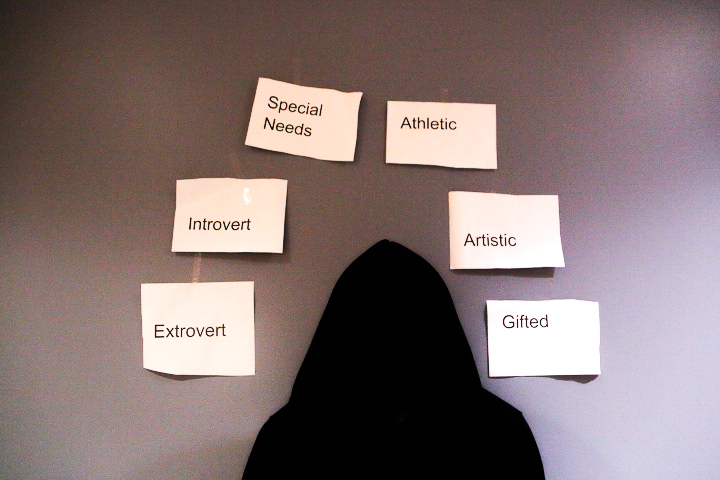
Oftentimes, educational institutions label students based on academic achievement or disabilities that prevent them from learning in a conventional way. While intended to facilitate novel learning environments and provide kids with the support they need, these labels can also serve as stereotypes that affect the way they are treated by their peers.
Although the labels themselves are not necessarily dangerous, it is the negative connotation with which they are perceived that causes the whole meaning of the word to change. It no longer serves as a diagnosis or a score on assessment, but as a barrier limiting the potential of high school students.
In an article by the Time Magazine article, award winning psychologist Mary C. Murphy testified:
“And being at the top isn’t as good as we might think. In these environments, where mistakes are taken as signs that people aren’t smart or can’t cut it, the stars are unable to relax and take on challenges. They’re also constantly watching their backs because a new star is born every day. Meanwhile, the supposedly “ungifted” at the bottom of the hierarchy can feel overlooked and start to doubt their abilities.”
Our society glorifies children who excel in academics, labeling them as gifted, but that distinction comes with a weight of its own. These labels serve as a pressure on the person they are given as people take the implications to an unhealthy extent. Gifted people may go on to assume they are great at everything, and this could lead to them falling into multiple higher classes they struggle in because they were gifted in one particular area.
In reality, there are many parts of a person that contribute to their success in academics other than their IQ score. When people judge others by a singular indication of their intelligence they only see a small fraction of the person on the inside.
Al Boulicault, Pathway Special Services, Upper School Case Manager at Westminster Christian Academy explains the importance of respecting others:
“First and foremost let’s understand that when we give someone a label, we want to define that person as a person first. Take a student with autism, or a student with learning disabilities for example. Instead of saying that a student is autistic, we want to define who they are in a different way. This boy is a boy first and autism second.”
People should always be seen as people first regardless of their medical diagnosis or academic label. Ultimately, everyone deserves to be treated with respect and human decency, yet when people allow something so small to be their entire vision of them, they basically forget the person and remember the label.
According to Ali Stewart, another Pathway Special Services, Upper School Case Manager:
“If a teacher sees a label they might make assumptions that aren’t totally accurate to what the kids are capable of. I believe that our educators know this and are careful about it, but it is also a conscientious effort to make sure that we are seeing the student for who they are. And we are recognizing them as an image bearer, aside from the label.”
There are many ways for people to be smart aside from being “good” at school. For example, someone who is emotionally smart may not exactly be book smart, and a diagnosis does not dictate the intelligence of a person in every aspect of their life. By placing a label that carries the connotation “unintelligent” on someone, it induces people to believe this person’s capabilities are stuck within this box, and takes away their ability to share their unique gifting with the world.
Finally, Boulicault emphasizes the importance of taking the time to understand people as human beings:
“Labeling and passing judgment on someone go hand in hand. If we label somebody we’re giving them a set of characteristics before you even get to know somebody, you automatically have made an assumption of who that person is, and I think that’s not very fair to that person.”
In order to become a better society, people need to define others not based on the superficial labels they are given, but by the content of their character. When everyone can put aside these labels and respect people for being themselves, it creates a better learning environment and allows a diversity of thought that promotes innovation.