
At this year’s Academy Awards, the Best Picture lineup was stacked with films that ranged from retold classics to intimate yet comical character studies. Among them, One Battle After Another ultimately took home the top prize, solidifying its place as one of the most critically celebrated films of the year. But as with many award-winning films, critical acclaim and personal enjoyment do not always align.
Directed by Paul Thomas Anderson, a filmmaker widely regarded as one of the greatest working auteurs, One Battle After Another fits very comfortably within his legacy. Known for films like There Will Be Blood and Phantom Thread, Anderson has built a career on meticulous storytelling, morally complex characters, and an unmistakable visual style. His work does often demand patience and your complete attention (not necessarily a bad thing), but rewards viewers with layered narratives and lasting emotional impact you carry with you even after the credits roll.
One Battle After Another continues in that tradition. The film follows an aging revolutionary (Leonardo DiCaprio) who is pulled out of obscurity when his daughter mysteriously disappears. Forced to confront a past he thought he had buried, he sets out on a relentless search that leads him back to a familiar adversary: Steven Lockjaw (Sean Penn). Without directly referencing current events, the film feels deeply embedded in today’s cultural and political atmosphere, offering commentary that subtle yet wonderfully striking.
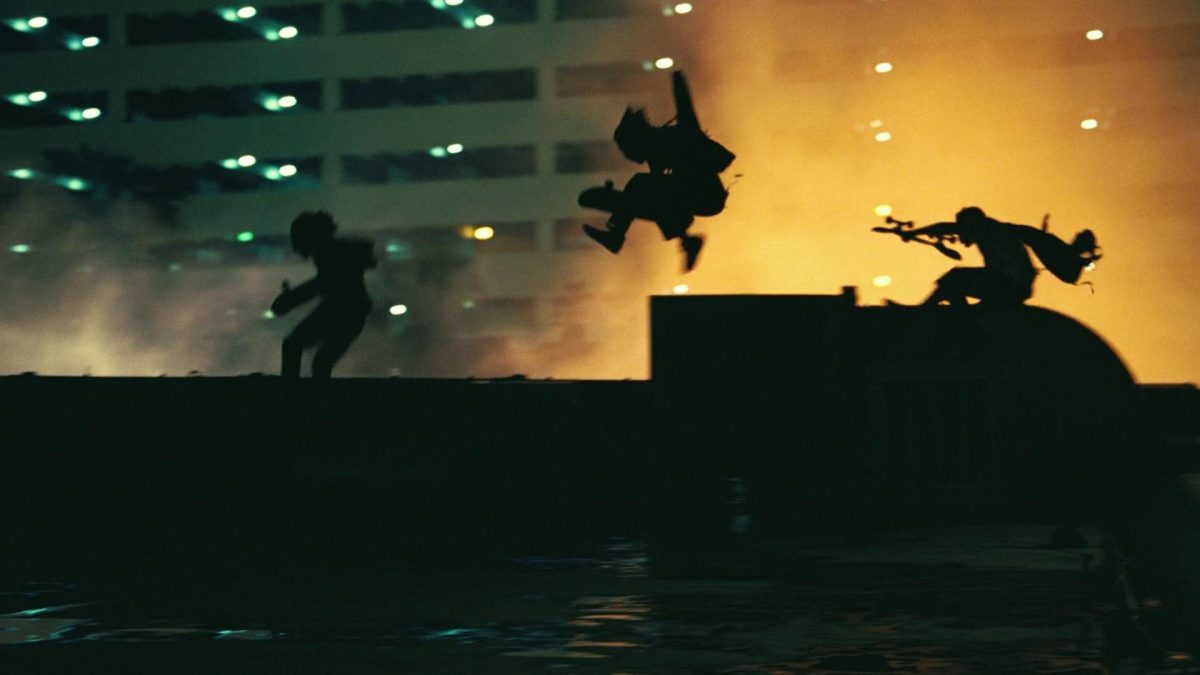
There is no denying that One Battle After Another is, on a technical level, an exceptional film. The screenplay is tightly constructed, leading to a reunion that feels well earned. Anderson’s direction is precise, allowing for plenty of action while maintaining a steady emotional undercurrent throughout. Visually, the film is stunning—the color grading in particular stands out, creating a distinct tone that elevates every shot with warm and cool tones perfectly fitting the emotion of the scene.
And then there is Leonardo DiCaprio. In a career already filled with standout performances, his role in One Battle After Another ranks among his best. He brings a layered intensity to his character in a way that anchors the entire film. Without a doubt, DiCaprio gives a performance worth sitting down for the nearly three hours of film to appreciate. All of this is to say: this is a good movie. Arguably, it is more than that—it is an important one.
But as a high school student and cinephile, it also just… was not for me. As a viewer, I tend to gravitate toward films that prioritize atmosphere and aesthetics over intense action. Low-stakes, visually driven stories that leave room for escapism and personal interpretation. One Battle After Another, while visually beautiful, leans heavily into tension and thematic weight. It asks a lot of its audience, and while that’s part of what makes it so impressive, it also makes it a more demanding watch.
If you asked me what my favorite part of the film was, I wouldn’t point to a specific scene or line of dialogue. I would tell you it was the color grading. That alone says a lot about my experience as a viewer. While I recognize the brilliance of the storytelling and the performances, I never felt fully drawn into the film in the way I had hoped. And maybe that’s the film’s purpose. Perhaps that is exactly what Paul Thomas Anderson Intended.
Not every critically acclaimed film is meant to resonate with every audience. Sometimes, a movie can be objectively well-crafted and still miss the mark on a personal level. One Battle After Another exists in that space for me. I would call it a film I respect more than I love.
While it didn’t fully resonate with me, One Battle After Another will absolutely find its audience. Fans of PTA’s previous work—especially those who appreciate slow-burn storytelling and character driven narratives—will likely find a lot to admire here.
On a platform like Letterboxd, where personal taste and critical evaluation often collide, I would give One Battle After Another a solid 3.5 out of 5 stars. It’s a rating that reflects both sides of the experience: admiration for the craft, and honesty about my own preferences.