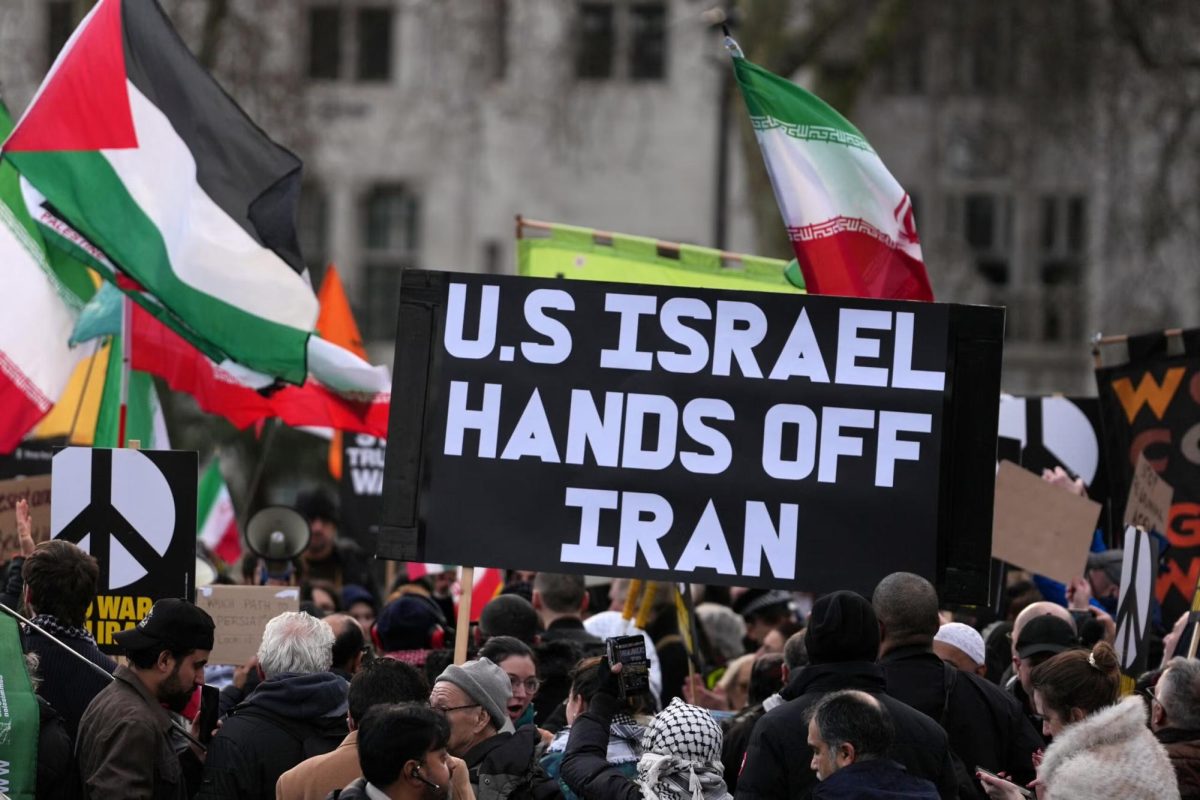

Operation Epic Fury, which began at the turn of February 2026, caught much of the world off guard with a sudden, large-scale conflict. However, this clash did not start overnight. The relations between the U.S. and Iran have been a powder keg for decades – filled with bitterness, political turmoil, and rising hostility that the average person has been utterly unaware of.
The first major landmark in the history of the U.S. and Iran comes in 1953, in which the United States CIA, along with the MI6 of the United Kingdom, helped to overthrow the Prime Minister of Iran, Mohammad Mosaddegh in a coup d’etat. Called Operation Ajax, this overthrowing was done in an effort to protect British oil after Mosaddegh had nationalized their oil industry. The operation was a success, and led to the arrest of Mosaddegh and many of his extremist supporters along with bringing the Shah back to power in Iran who relied heavily on the United States for support to remain in power for the decades to come. Westminster’s U.S. History teacher Dr. Gall emphasizes the significance of this event:
“That led to a lot of bitterness in Iran. The shah was very friendly in the United States, but he ruled with an iron fist and he had a very brutal police force called the Savak, so there was always a lot of anger towards the United States from that point.”
Unfortunately, the 1953 CIA-led coup on Iran was only the beginning. After 26 years of a consistent yet firm rule by the Shah, the people of Iran led an overthrow of the Shah in 1979, which is also known as the Iranian Revolution. The Iranian Revolution was merely a culmination of events that gradually raised the civil tensions towards the Shah and his Imperial, Western rule. One of the most resented byproducts of the revolution was the hostage crisis that occurred in late 1979, in which young Islamists invaded the US embassy in Tehran and took its staff hostage. This hostage situation was done out of fear for another coup and to use as leverage to return the Shah back to Iran for trial. Ultimately, the hostages were released on January 19, 1981, the day of newly elected Ronald Reagan’s inauguration. However, the sentimental damage had been done. Dr. Gall offers insight into what came out of this revolution:
“That’s kind of where the “death to America” chants really started. […] They captured our embassy there and held our diplomats hostage for 444 days. From there, they really sponsored and funded terrorist groups all over the Middle East, Europe, and even the world.”
Although the seed of conflict had been planted as early as 1979, the primary source of concern for the United States has developed in the past 30 years. As early as the 1990s Iran has been suspected of enriching uranium on an extremely large scale. This level of production has caused the United States to believe that Iran is increasingly capable of producing nuclear weaponry. Neighboring middle eastern nations such as Israel further encourage and push out this same possibility to much of the world. Dr. Gall elaborates on the work of recent U.S. presidents related to Iran’s potential nuclear capabilities:
“We have tried to negotiate, they have refused inspections, they have never really been seen as a trustworthy partner. Now, Obama thought he had a deal that would slow them down for decades. Trump came into power in 2017, and threw that deal out the window. Ever since, it has been a real source of tension for both parties.”
The quarrel between the United States and Israel against Iran has culminated to a breaking point in the past year. In the summer of 2025, Donald Trump launched drone strikes on Iran’s alleged nuclear sites. Although the administration originally claimed they were completely destroyed, as of now it is being reported that is not the case. Additionally, poor communication with Iran through Oman has caused the United States to lurch themselves into war with Iran as they feel progress in negotiations is not being made. Dr. Gall shares his viewpoint onto whether or not this onslaught should have been anticipated:
“I hate to say it is inevitable, but multiple administrations have had a hard time finding a solution. This could potentially be a really great thing for the peace of the region, but it could also be years of chaos. I think we do not know how this is going to turn out. There is a whole lot of uncertainty.”