
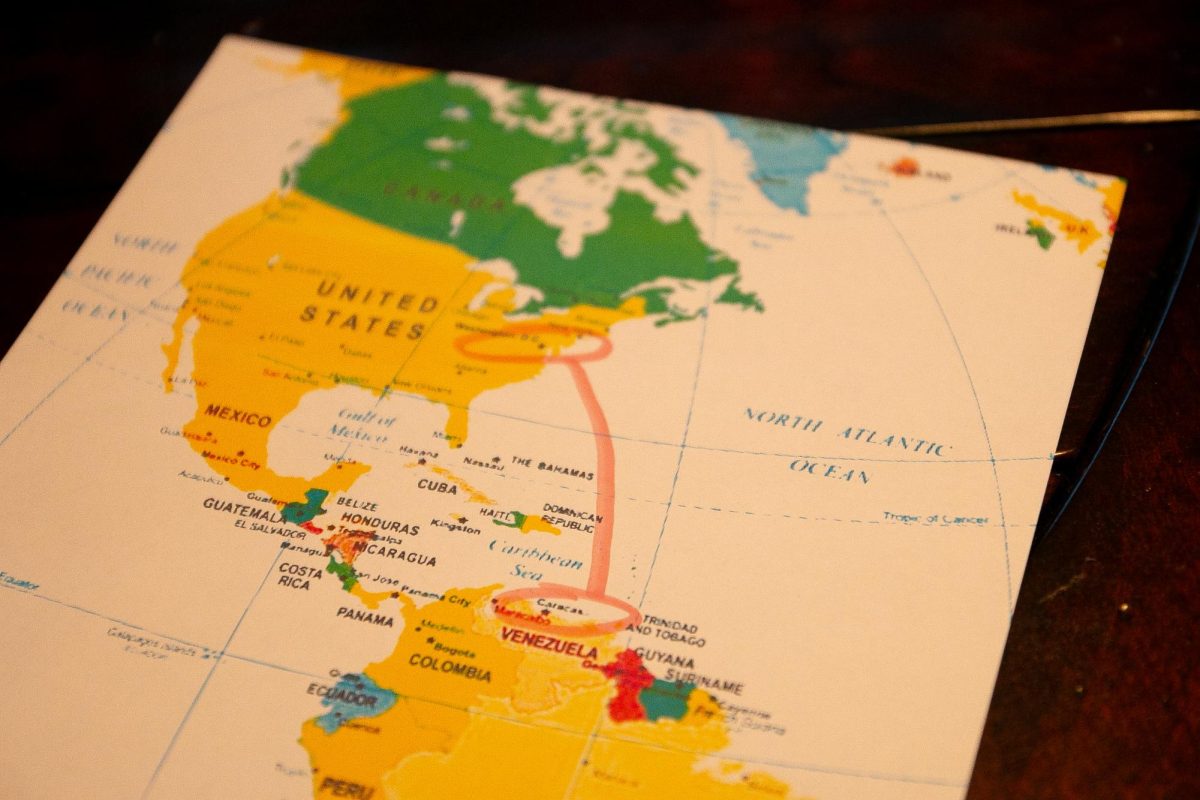
On January 3rd, 2026, US special operations forces executed what the Pentagon called “Operation Absolute Resolve”. It was a covert mission into Caracas that resulted in the capture of Venezuelan President Nicolás Maduro. The Venezuelan leader was flown to New York to face federal drug trafficking charges, marking one of the most bold acts of regime change in recent American history. Videos flooded social media showing Venezuelans, both inside and outside the country, celebrating what appeared to be the end of Maduro’s authoritarian rule. But the jubilation obscures a more troubling reality: the operation was months in the making, built on a pretext that never fully explained its true objectives, and may have profound consequences for international law, constitutional governance, and great power relations.
The “conflict” began in September 2025, when tensions between the United States and Venezuela escalated over an alleged drug trafficking scandal involving Venezuelan cartels operating in US waters and territory. President Donald Trump labeled Maduro a “narco-terrorist,” accusing him of enabling drug smuggling and illegal immigration into the United States. In response, the US dramatically increased its military presence in the region, conducting over 20 missile strikes on Venezuelan vessels and seizing boats suspected of smuggling drugs along the eastern Pacific Ocean, allegedly targeting cartels connected to Maduro’s administration. The strikes killed more than 80 people, and Trump suggested the CIA could expand operations into Venezuela itself if evidence of trafficking networks was found within the country’s borders. An article from the Council on Foreign Relations, a world-renowned US-based think tank, noted the unusual nature of the conflict:
“The United States initiated a military campaign against Venezuelan drug cartels in September, claiming cocaine smuggling by the ‘narco-terrorists’ poses an imminent threat to the United States. However, legal experts have cautioned that there is no clear authority to use military force against drug traffickers and cartels, even if some are designated as foreign terrorist organizations (FTOs).” The uptick in military force was a stark contrast from the United States’ common practice of seizures and economic sanctions when in conflict with a country.
However, the scale of military action never matched the stated objective. Historically, the United States has relied on seizures and federal law enforcement to combat drug trafficking in its waters—not aircraft carriers, naval strike groups, and fighter jets positioned for immediate deployment. Former US Ambassador to the United Nations John Bolton suggested the drug narrative masked deeper strategic objectives:
“Personally, I think there’s a very strong US national security interest in overthrowing the Maduro regime. It’s propped up by the Russians, the Chinese, the Cubans. Iran is all over it. Iran’s largest embassy is in Caracas, where they help coordinate Hezbollah activities in Latin America and launder their sanctioned oil revenues through Venezuelan banks. So, we’ve got plenty of good reasons to get a new regime in and hopefully supported by the people.”
NBC News would later reveal just how calculated the buildup had been:
“For months, the U.S. military had been amassing a presence off Venezuela’s coast and conspicuously blowing up alleged drug trafficking boats and killing the occupants. At the same time, U.S. intelligence agencies were carefully studying the country’s authoritarian President Nicolás Maduro, learning minute details such as his eating habits while special forces secretly rehearsed a plan to forcibly remove him.”
The strikes on drug vessels weren’t just counter-narcotics operations, they were the camouflage for a regime change operation being planned in the shadows.
If regime change was indeed the objective, the stakes were always dangerously high. The United States attempted to force leadership change in Venezuela during Trump’s first term, but the effort collapsed due to poor planning and execution. This time, military action was prioritized from the start. But the response was swift and alarming. Venezuela mobilized troops along its coast and armed for confrontation. More significantly, global powers with whom the United States already holds deep tensions publicly pledged support for Maduro. A report from Newsweek highlighted letters from Russian President Vladimir Putin and Chinese President Xi Jinping:
“Putin expressed “unwavering solidarity with the friendly people of Venezuela,” writing, “I am certain that under his leadership, the Bolivarian Republic of Venezuela will overcome all trials with dignity and defend its legitimate interests in these turbulent times.” Xi’s letter was reportedly even more strongly worded: “China reiterates its categorical rejection of external forces interfering in Venezuela’s internal affairs under any pretext and will continue to firmly support, as always, Venezuela in safeguarding its sovereignty, national security, national dignity, and stability.”
What began as a drug intervention operation had escalated into a potential flashpoint for great power conflict. The United States signaled this was more than an effort against “narco-terrorism”, but rather a push to remove a leader who increasingly resembled a dictator. But provoking Chinese and Russian involvement left D.C. with few good options. Having provoked the confrontation, backing down risked humiliation, yet pressing forward risked broader conflict. Former Ambassador Bolton had summarized the dilemma in December:
“I think Trump’s put himself in a box here. If he takes no military action, he’s going to look foolish for having an entire carrier strike group spend a couple weeks sailing around the Caribbean and go back without doing anything. But I think he looks worse if he launches some Tomahawk missiles, if he has special operators do some operations inside Venezuela—which I don’t think Trump would appreciate much because he wouldn’t be able to talk about them, but that probably wouldn’t restrain him. But if we take steps like that and Maduro is still in power when it’s all said and done, then I think we look more foolish.”
Former Ambassador James Story had warned in late December:
“The assets are there to do everything up to and including decapitation of the government. Now, has a decision been made? I don’t know, but it looks increasingly like some action may take place.”
The decision, it turned out, had already been made.
Now, with Maduro captured, the operation that Bolton feared would make the US “look foolish” has succeeded at face value. But the stealthy raid has sparked fierce political debate over the ethics and legality of such an abduction. Democrat Representative Jim Himes of Connecticut argued the operation violated constitutional principles:
“It’s also clearly not legal under the Constitution, because though presidents of both parties have argued against this, the Constitution is really pretty clear that the representatives of the people get to be consulted and ultimately approve military activity.”
As Venezuelans celebrate in the streets and Maduro faces a New York courtroom, the operation that ended a dictatorship has only begun to reveal its true costs, measured not in the success of a single night’s mission, but in the international response still to come and the constitutional precedents left in its wake.