

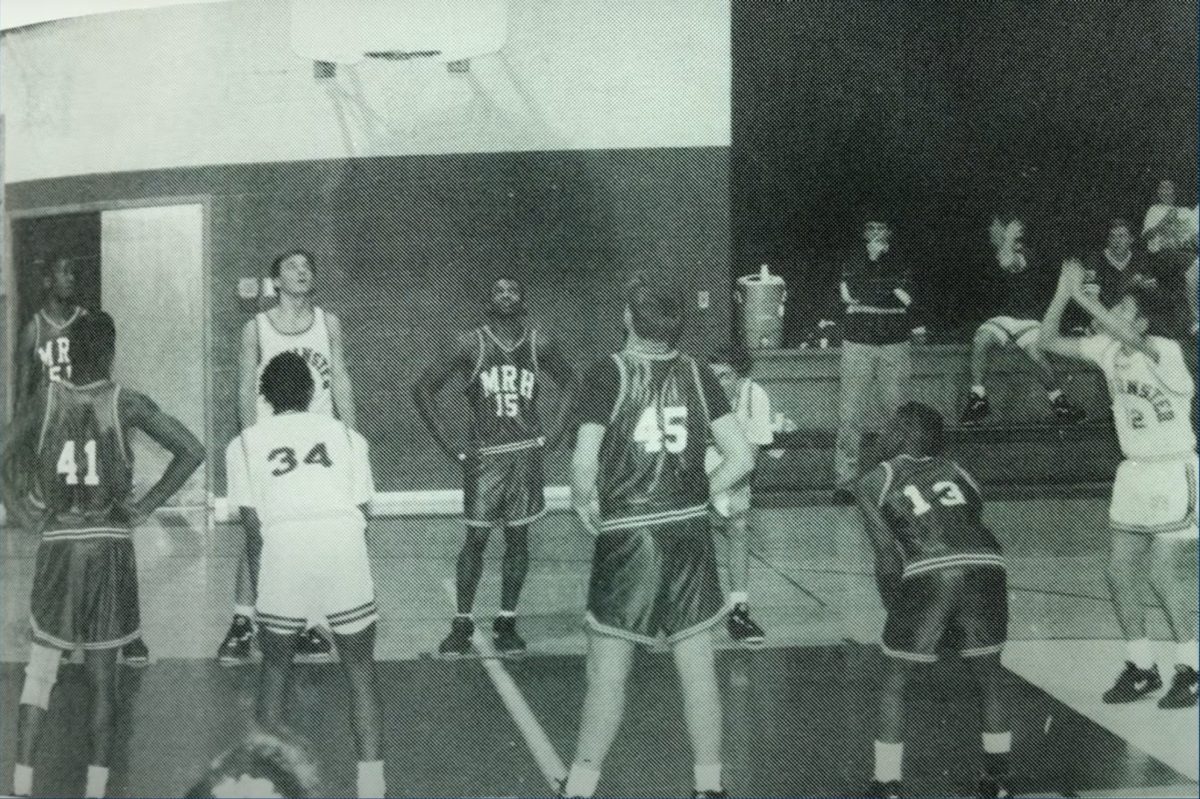
When Westminster opened their doors in 1976, the athletic program was far from what we know of it today. At the time, they had only six sports: Girls Softball, Girls Volleyball, Girls Basketball, Boys Basketball, Cheerleading, and Boys Softball. Yes, you heard that right — boys fast-pitch softball. The growing school was limited in its ability to expand its athletic program, and remained merely recreational until the former head of school Jim Marsh arrived from Florida in 1985.
After being viewed for years as an underperforming school athletically, Marsh sought competitiveness in athletics for Westminster athletes in a way that exemplified the mission of the school, a journey that would raise Westminster’s athletic program to the upper echelons of sports programs in the St. Louis area.
Westminster’s new campus was located off of Ladue Road, which was originally a middle school. At the time, it was a more than suitable campus for the young, small Christian school that it was. The campus contained a fair amount of athletic facilities: a soccer field, a baseball field, one gym, and a pool. Certainly not sufficient for today’s standards, but with a limited number of kids participating in a limited number of sports, they didn’t need every sport under the sun. After the school’s tenth year, Marsh was pivotal in the expansion of the athletic program having previously worked in Fort Lauderdale, Florida. A rough estimate of about 300 students at the time still tagged the school as nothing more than novice and growing, but Marsh’s impact would be felt immediately for the athletic program.
The 1985-86 school year not only brought Marsh to the administration, but was a significant year for athletics as they became accredited by MSHSAA, Missouri State High School Activities Association. In an interview with Marsh, he emphasized the importance of this accrediting as it “allowed us then to be a part of the MSHSAA High School Athletic Association. So, we started playing in district tournaments, and we were independent. So, we traveled all over and it gave us kind of a start. We had a league so the games meant something and then we played in the state tournament in the districts. We didn’t always fare well back then, but it gave us our start.”
As time went on, the student population grew, and the school became more cramped, the demand for a more expansive athletic program became a hotter topic.. As a result, in the mid 1990s, a six million dollar renovation took place on the ladue road campus that expanded the building and campus as a whole, including a football field, weight room, wrestling room, and a few more amenities. Although the school and its campus grew, athletic performance remained stagnant. This time seemed to be something of a plateau for athletics at Westminster—they were the type of team you would want your school to play on homecoming because they were a guaranteed victory. This level of performance was, to put it kindly, atrocious. It wasn’t until a few years after the renovation that Jim Marsh and the administration began to take into serious consideration how they could increase the quality of the program to better the student experience.
During the same interview, Marsh recalls a time that he believes was the impetus for the changes made to the athletic program in the early 2000s: “we hosted the districts for the first time […] it was a girls [basketball] game and we played the first game. We were decimated, and I remember seeing the looks on the girls’ faces, especially the seniors […] and it was just kind of a defeated look, and it bothered me. Then I came back on Saturday for the final and it was Visitation versus Villa and the game was phenomenal. Our gym was packed with people and it was just that kind of an electric, great high school basketball game and district tournament–the way you would want to envision it. […] I was thinking to myself, “Our kids deserve to have that kind of an experience. We’re not competing for district championships, seeded last, we need to get better, we have the facilities now to do it. I was just determined at that point that our kids needed to be a part of an athletic program that would give them those kinds of experiences and those kinds of memories.”
Ultimately, this district tournament that Marsh witnessed would lead to him later bringing in a consultant he found from a friend, Matt Gossage. This consultant who had previously worked with Gossage in Georgia looked at the structure of the school’s athletic program at the time – he interviewed coaches, parents, players, board members, and got a general idea of the philosophies and goals of the program at the time. Following the report from the consultant, the main concern was that Westminster lacked any sort of foundation the program was built upon. As a result, they used the feedback to create what is now known as the Ten Pillars, the framework to guide how the school will make decisions related to athletics. The Ten Pillars have become a staple of Westminster Athletics and is the guiding force that has gotten the athletic program to where it is today. Almost every student sees the pillars daily—plastered amongst the gym wall and in the swimming pool. These pillars not only created overarching goals for Westminster athletic teams and individual athletes, but displayed the ways in which the school wants to honor Christ through competitive play.
Approaching nearly 25 years since the implementation of the 10 pillars, there have been significant changes to not only Westminster but the wider secular world as well. As society changes, Marsh explains how he desires the program to maintain the spirit of Westminster athletics for years to come: “The first thing you need to do and Westminster and leadership needs to do is clearly define the non-negotiables. The things that will never change at Westminster regardless of technology or whatever—non-negotiable beliefs and philosophies, pillar standards that we are not going to change. […] That gives you the freedom to work on making changes that will respond positively to changes in the culture, changes in educational strategies, changes in the athletic programs, and the way and opportunities and the way they work for kids. So, I would say that in terms of the next 20 years I believe that these ten pillars will continue to be non-negotiable […] Maybe we’ll change how they’re applied, the expectations for kids in a fast-changing world, but in terms of the principles, the pillars themselves… they’re not going to change, this is who we are.”
Since the introduction of the 10 Pillars, the school’s athletic program has been able to implement decisions that align with the values presented in the pillars. The changes that came quickly were additions such as the implementation of an in-year/summer strength and conditioning, new coaching staff that aligns with the values, and in general a structured athletic plan and outline that will allow athletic teams to remain competitive but centered around Christ. By honing in on this, athletics as a whole has blossomed and has gone on to dominate in several sports for many consecutive years and as a whole has been competitive in nearly all the sports they are involved in. A few to highlight would be the 2005 men’s basketball final four appearance in state, baseball’s 4 straight state titles from 2011-2014, girls’ volleyball’s back to back state championships just a few years ago, individual state success in swim & dive, golf, and so much more. With the countless successes and growth of culture in athletics as a whole, one can only imagine what the program will look like in the bright years to come.