
Picture this: it is 9:45 pm and you are under the fluorescent lights of Westminster’s Blue Gym along with 80 other girls. You’re tired, you’re sweaty, and the only thing you may be thinking about is going home and going to sleep. But you stay and you put in your best effort because you and these girls have one common goal: to annihilate the opposition by winning Lip Sync.
One of the greatest and most memorable Spirit Week traditions is the iconic Lip Sync competition. From the costumes to the routines, the Lip Sync dances consistently prove to be one of the greatest forms of entertainment of the week. As Westminster is celebrating its 50th anniversary, let us take a look at how this iconic competition first began.
As all good traditions do, Lip Sync has had many evolutions over the years. During Westminster’s first ever Spirit Week in 1990, Lip Sync did not exist. That is, it did not exist in the way we think of it today.
In the early days of Spirit Week, “Class Cheer” took the place of Lip Sync. Each grade would get a few words, and they would have 10 minutes to come up with a cheer using those words. Sometimes the boys would even dress up as cheerleaders for this event. While the Class Cheer is very different from the modern Lip Sync tradition, it paved the way for the beginning of a new era.
The iconic Lip Sync tradition officially kickstarted in 1992. While dancing was still a major part of the performance, what the judges mainly focused on was the storytelling aspect. Each grade had a different story to tell, and many grades incorporated boys in their performances as well as girls. This helped move the story forward, and even earned the grades extra points. Lizzie Vogel, current Westminster art teacher and alum, remembers how Lip Sync used to be;
“It used to be much smaller, and it was pure lip sync. There wasn’t much movement, and it was strictly microphones and focused more on the storytelling.”
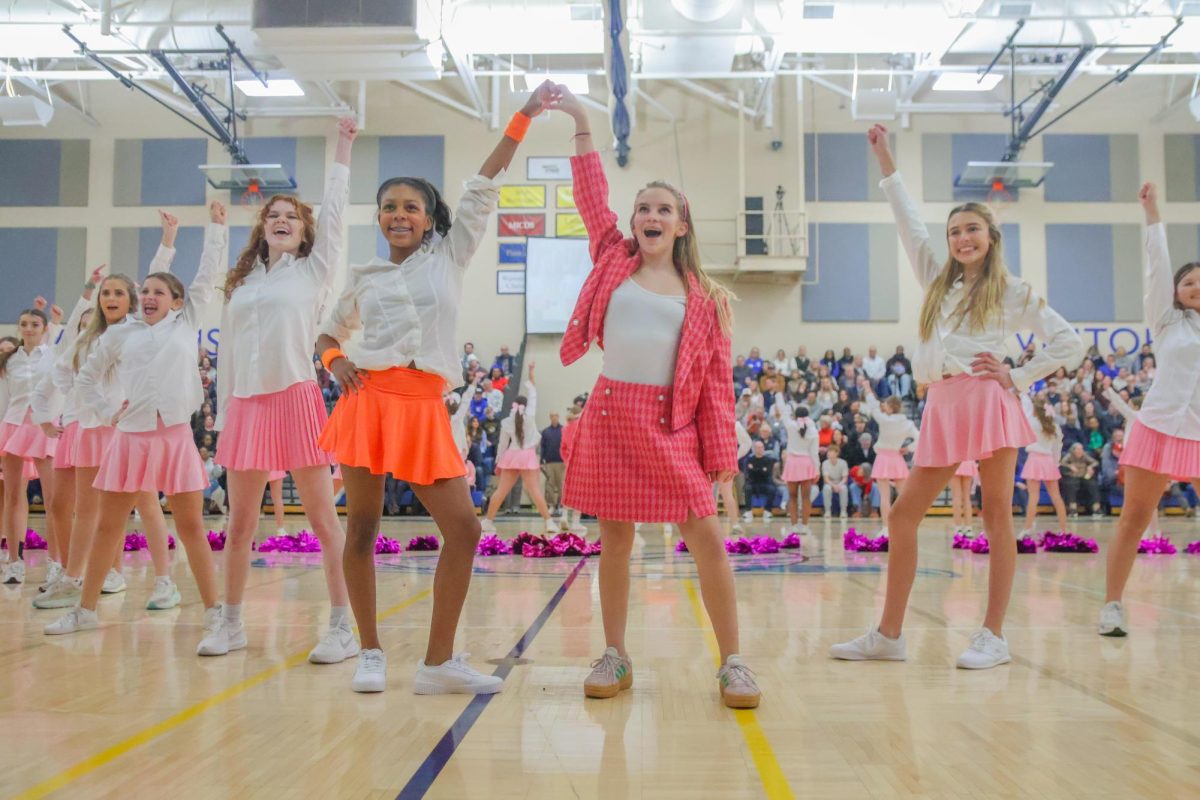
As the years progressed, so did Lip Sync. Eventually, each performance would become bigger than the next, with more dancing and elaborate costumes. While lip syncing and storytelling were still incorporated, the focus seemed to shift more to the choreography. Each grade’s dance was different than the next, making the event more and more exciting to watch.
Kate Sowers, senior, is one of the current Lip Sync leaders for the 12th grade. For weeks, her and the other leaders take time to choreograph and organize what their performance will look like that year. Sowers speaks on what it takes to craft the “perfect” performance;
“Energy is a big factor in what makes your performance stand out. So is facial expressions and showing the audience the emotion that ties into the dance. We also make sure our dancers are synchronized so we look clean and put together.”
Even now, Lip Sync is one of the most anticipated events of Spirit Week. The mixture of exciting dances, creative costumes, and trending themes really drive the event home and make each one unique. But the vibrant performances are not the only aspect that makes Lip Sync memorable.
Throughout the process of crafting a performance, the girls in each grade really grow closer as they collaborate with one another. They all want to make the best Lip Sync performance as they can, and their passion ignites a unique friendship between them all. Sowers says;
“One of the best parts about Lip Sync is coming together as a class and talking and hanging out with girls you normally wouldn’t. It’s something that a lot of people can look forward to.”
All in all, Lip Sync has been special from its beginning. Whether you’re a spectator or a performer, you will find joy in what this tradition has to offer. And maybe, deep down, you will come to realize that all of those late night practices were all worth it in order to make memories that will stick with you long after your final Spirit Week.